Concrete cancer repair council rules in Melbourne
By Artigellence ·
City of Melbourne says you don't need a permit for a hoarding on private property, but you must get one for scaffolds on a public road or footpath, and it wants applications lodged at least 10 business days before the works. If the damaged concrete is part of an apartment building, the Owners Corporations Act also decides who is allowed to organise the repair.
Call (03) 9122 8610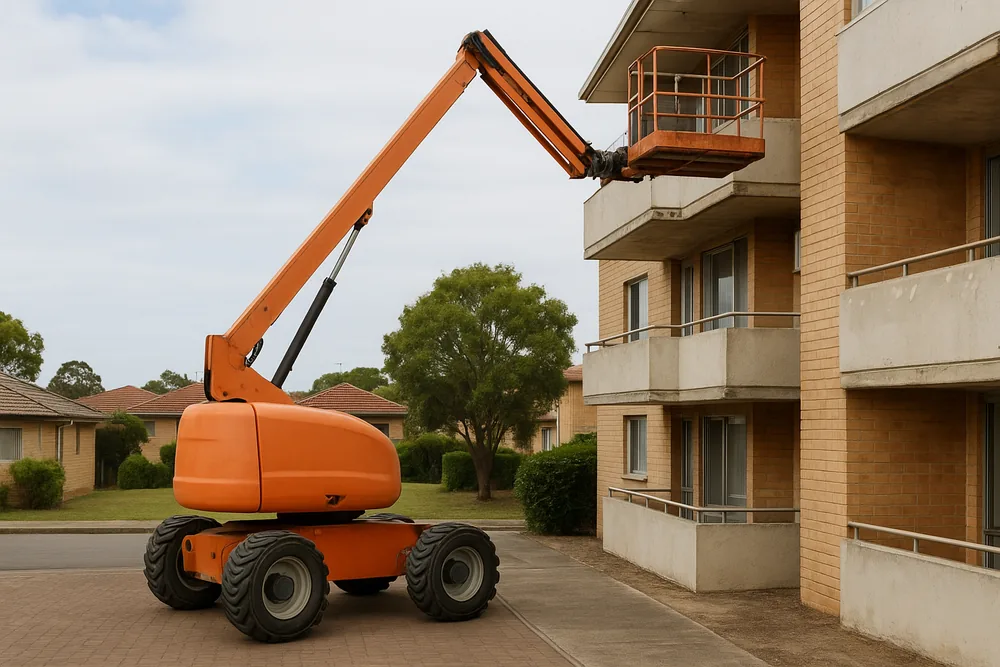
When the council gets involved
City of Melbourne states that a hoarding on private property needs no permit. A scaffold, gantry or hoarding on a public road or footpath is different. For those, City of Melbourne requires what it calls a temporary protective structure permit.
The same council also says that if any construction or maintenance work takes place in public space, including the footpath or road, you must hold a permit. Concrete cancer repair on a balcony or street-facing wall can easily fall into this category, because the access equipment has to stand somewhere.
If a protective structure will project over the street alignment, City of Melbourne requires a report and consent first, and that step comes before the permit application itself.
Timing and inspections
Permits take time, so they shape when a repair can start. City of Melbourne asks for a temporary protective structure application to be lodged at least 10 business days before the proposed works. For Docklands, which City of Melbourne lists among its neighbourhoods, that is the lead time to plan around.
Bayside City Council works in a similar way for its own land. It says to allow 10 business days for a decision, and that a permit must be in hand before anyone occupies Council property. Bayside also names cranes, cherry pickers, scissor lifts and concrete pumps as examples of plant and equipment that fall under its requirements.
Once a protective structure is up, City of Melbourne says a structural engineer must inspect it after installation. If it stays in place, the structure must be inspected on site and recertified by the engineer every six months. A long repair job on a tall building should allow for those checks.
City of Melbourne also issues permits to occupy space for motorised equipment, naming scissor lifts, cherry pickers and boom lifts among the items covered.
What happens if work starts without a permit
City of Port Phillip is direct about this. It says that if building works begin without an Asset Protection permit, infringement notices may be issued to the property owner, the builder, or both. The permit also involves a bond, which Port Phillip says is refunded once the site is reinstated to Council's satisfaction. St Kilda owners should read that as a reason to ask the repairer who is applying for the permit before any equipment arrives.
Apartments and owners corporations
In a strata building, the permit is only half the picture. Consumer Affairs Victoria says that under the Owners Corporations Act, the owners corporation must repair and maintain certain parts of the property. It also says a lot owner must not repair or alter common property unless the owners corporation has expressly authorised them to act as its agent.
For the part of a lot that you do own, such as its exterior, Consumer Affairs Victoria says the lot must be kept in good and serviceable repair. If requested repairs are not carried out within 28 days, the owners corporation can do the work without the lot owner's approval and charge the owner for the cost.
Concrete cancer starts when water gets through cracks or pores and reaches the steel reinforcement, where it forms rust. UNSW explains that the rust then forces cracks wider and lets in more water. That cycle is why a slow approval process between owners is worth avoiding, and why checking early who is responsible for the affected concrete matters.
Artigellence is the marketing business that operates this site and writes its articles. It does not carry out the work described.
Thanks — we have your enquiry. Someone will be in touch shortly. Prefer to talk now? Call (03) 9122 8610.
Last reviewed · Updated · First published